


Bringing Home a Maine Coon Kitten: Essential Checklist
Prepare food, litter, bedding and safe toys before arrival to help your new kitten settle calmly into family life.

Before Your Kitten Comes Home
Maine Coons are slow developers. A kitten that looks enormous next to a British Shorthair of the same age is still a baby, and will keep growing until around three or four years old. That single fact shapes everything you buy in advance. Bowls, trays, beds and carriers all need to be sized for the adult cat you will have in a couple of years, not just the fluffy bundle arriving next week.
Set aside one quiet room before the big day. A spare bedroom, a utility room or a corner of the kitchen works well, provided it is warm, draught-free and away from the front door. Put the kitten's food, water, litter tray, bed and a couple of toys in there, and let the rest of the house stay closed off at first. Cats settle far faster when they can explore in stages rather than being given free run of a whole unfamiliar building on day one.
Food and Feeding Equipment
Ask the breeder what the kitten is currently eating and buy exactly that. Changing food during the first fortnight is one of the most common causes of upset stomachs in newly homed kittens. You can transition to your preferred brand gradually over a week or two once things have settled.
- A kitten formula, not adult food. Look for one designed for growing cats, and ideally for larger breeds. Maine Coons do well on a diet with good levels of animal protein and taurine.
- Wide, shallow bowls. Maine Coons have broad muzzles and long whiskers; deep narrow bowls cause whisker fatigue and messy eating. Ceramic or stainless steel is easier to keep clean than plastic.
- A raised stand or a stack of books. As your kitten grows, lifting the bowls reduces neck strain and helps digestion.
- A water fountain or several water bowls. Many Maine Coons prefer running water and drink more when it is available, which supports kidney and urinary health.
- Wet food daily. Moisture matters, particularly for a breed prone to urinary issues, so aim to include at least some wet food in the routine.
Litter Trays and Toileting
Buy a tray that looks far too big. A standard kitten tray will be useless within months. An under-bed storage box with a low entry cut into one side is a cheap and genuinely effective solution, and it will still fit a fourteen-pound cat with room to turn around.
- Two trays minimum. The usual guidance is one tray per cat plus one, and a large breed benefits from the extra space.
- Fine, unscented clumping or non-clumping litter. Scented litters put many cats off, and perfumed dust is unkind to small airways.
- A litter mat. Maine Coon paws are big and carry a surprising amount of grit, so a textured mat under the tray saves your floors.
- A scoop and a lidded bin. Scoop twice daily from the start; it keeps the tray appealing and helps you notice any changes in output early.
Bedding, Scratching and Grooming
Maine Coons are sociable cats who like to be near their people, but they also appreciate a high vantage point. Offer a choice: a soft bed on the floor, a cosy cave for hiding, and a sturdy cat tree with a platform near a window.
- Washable bedding. Two or three small blankets you can rotate and launder are more practical than one elaborate bed.
- A heavy, tall scratching post. This is a big cat with powerful claws. Flimsy posts tip over, and once a cat loses confidence in a post they tend to choose the sofa instead. Sisal rope and a solid, wide base are essential.
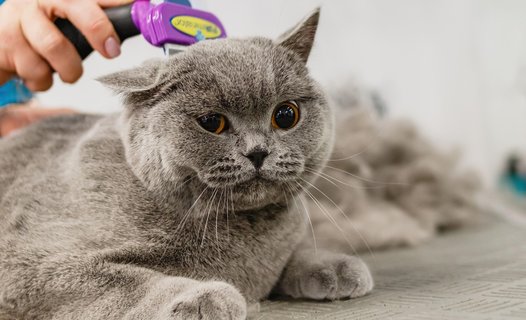
- A slicker brush and a metal comb. The semi-long coat tangles behind the front legs, under the belly and around the ruff. Daily handling and gentle brushing from kittenhood makes grooming a pleasant routine rather than a wrestling match.
- A carrier with a removable top. It makes vet visits and nail trims far less stressful, and it will need to be large enough for a fully grown cat.
Safe Toys and Play
Play is how a kitten learns that hands are not toys. Use wand toys, not fingers, and put the wand away afterwards so trailing strings are never left unsupervised.
- Wand and feather toys for interactive sessions, two or three short bursts a day.
- Soft balls and crinkle toys that can be batted and chased.
- Puzzle feeders to slow down a greedy eater and provide mental stimulation.
- Avoid: string, ribbon, elastic bands, hair ties, small bells and anything with loose parts that could be swallowed. Thread-like objects cause serious intestinal damage in cats.
Health, Safety and the First Week
Sort out the practicalities before your kitten arrives. Register with a vet, confirm the kitten is microchipped and that the chip is registered in your name, and check the vaccination and worming record the breeder provides. Ask specifically about screening for hypertrophic cardiomyopathy and spinal muscular atrophy, as these are known concerns in the breed. Pet insurance is worth arranging on day one, before any condition becomes "pre-existing".
Kitten-proof the house as you would for a toddler: cover cables, secure bins, remove lilies and other toxic houseplants, and check that windows and balconies cannot be pushed open. Keep the home calm for the first few days, introduce family members one at a time, and let the kitten come to you rather than the other way round. If there are children, teach them to sit on the floor and let the cat approach.
Expect a little hiding, a slightly loose stool from the stress of the move, and a lot of sleeping. Give warmth, quiet and predictable routine, and within a fortnight you will have a confident, chatty, remarkably large kitten who follows you from room to room.

Post a comment