


Feeding Your Maine Coon a Balanced and Healthy Diet
Discover portion sizes, protein needs and feeding schedules that support muscle, joint health and steady growth for life.

Why Maine Coons Need Their Own Feeding Plan
Maine Coons are not simply large cats. They are a different shape, with a different growth curve and a different appetite. A mature male can weigh anywhere from 7 to 10 kg, while females typically settle between 5 and 7 kg. That bulk is carried on a long, rectangular frame with heavy bone, so what works for the average domestic shorthair will leave your Maine Coon either permanently hungry or quietly overweight. The reassuring news is that once you understand a handful of principles — generous protein, controlled portions and patience with their slow growth — feeding becomes remarkably straightforward.
Protein First, Always
Muscle on a cat this size takes real raw material. Look for a food with a named animal protein as the first ingredient and a protein content of at least 30–35% on a dry matter basis for adults, rising to around 35–40% for growing kittens. Fat should sit somewhere between 15% and 20%, providing the concentrated energy a large cat needs without forcing them to eat enormous volumes at every sitting.
Two nutrients deserve particular attention:
- Taurine — an essential amino acid that cats cannot make in sufficient quantities. It supports heart muscle and vision, and Maine Coons are already predisposed to hypertrophic cardiomyopathy, so never compromise on it.
- Omega-3 fatty acids — found in oily fish and marine sources, these help manage inflammation in joints that carry more weight than most.
Wet food is a valuable part of the mix here. It lifts water intake, which matters for kidney and urinary health, and many Maine Coons prefer the texture.
Getting Portions Right at Every Age
Maine Coons keep growing until they are around three to four years old, so a twelve-month-old is still very much a work in progress. Feed a complete growth or all-life-stages formula until at least twelve to fifteen months, then transition gradually to an adult diet.
As a rough starting point, an active eight-kilogram adult needs roughly 400–480 calories a day. A neutered, more sedentary cat of the same weight may need only 300–350. Kittens burn far more energy per kilogram: a four-month-old might take 250–300 calories spread across the day. These figures are guides, not gospel — your vet can fine-tune them based on body condition.
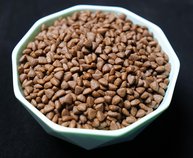
To keep things practical, weigh food rather than guessing with a mug. A typical dry food provides around 350–400 calories per 100 grams, so an average adult might take 80–110 grams daily, split into two meals. If you feed both wet and dry, count every calorie from both sources.
A Feeding Schedule for a Slow-Maturing Giant
Little and often suits kittens best. From weaning to around six months, offer four meals a day. Between six and twelve months, drop to three. By adulthood, two meals — morning and evening — work well and help you monitor appetite, which is one of the earliest indicators of illness.
Free-feeding dried food is tempting with a cat who always seems hungry, but it makes portion control almost impossible and dulls the natural appetite signals you want to preserve. Scheduled meals also build a routine that reduces demanding behaviour.
- Up to 6 months: four meals, unlimited growth formula, weigh weekly
- 6–12 months: three meals, begin portioning to body condition
- 12–18 months: transition to adult food over seven to ten days
- Adult: two measured meals, adjust by 10% up or down as needed
Protecting Joints, Heart and Steady Growth
The single biggest mistake with young Maine Coons is overfeeding in the name of "growing big". Pushing calories accelerates growth, and fast growth in a heavy-boned breed puts strain on developing joints, particularly hips and elbows. Let them grow steadily rather than quickly.
Use a food formulated for large-breed growth, which will have a carefully balanced calcium-to-phosphorus ratio. Do not add calcium supplements on top of a complete diet — excess minerals during growth can cause as much harm as deficiency.
For joints, look for diets or supplements containing omega-3s, glucosamine and chondroitin, or green-lipped mussel. Many owners start joint support around middle age, but a conversation with your vet at any stage is worthwhile. For the heart, keep taurine and omega-3 intake consistent and mention any family history of cardiac issues at routine check-ups.
Everyday Habits That Make It All Easier
A few small routines pay off enormously over a lifetime.
- Weigh your cat monthly on pet scales and record it. Gradual changes are far easier to spot than a visual check.
- Learn to body condition score: you should feel ribs easily under a thin layer of fat, with a visible waist from above.
- Use a raised bowl. A tall Maine Coon crouching to eat is uncomfortable, and elevated feeding eases digestion.
- Try puzzle feeders for part of the daily ration to slow eating and add mental stimulation.
- Keep fresh water available in several places, and consider a fountain — many Maine Coons drink more when water moves.
- Change foods gradually over a week or so to avoid digestive upsets.
Finally, treat your veterinary practice as a partner. Annual weigh-ins and body condition checks, plus honest conversations about what you are actually feeding, are the simplest way to keep a Maine Coon thriving from kittenhood into a long, comfortable adulthood.
Post a comment